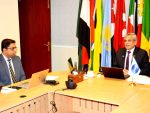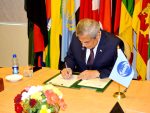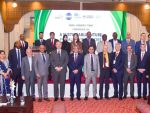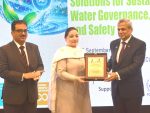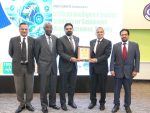
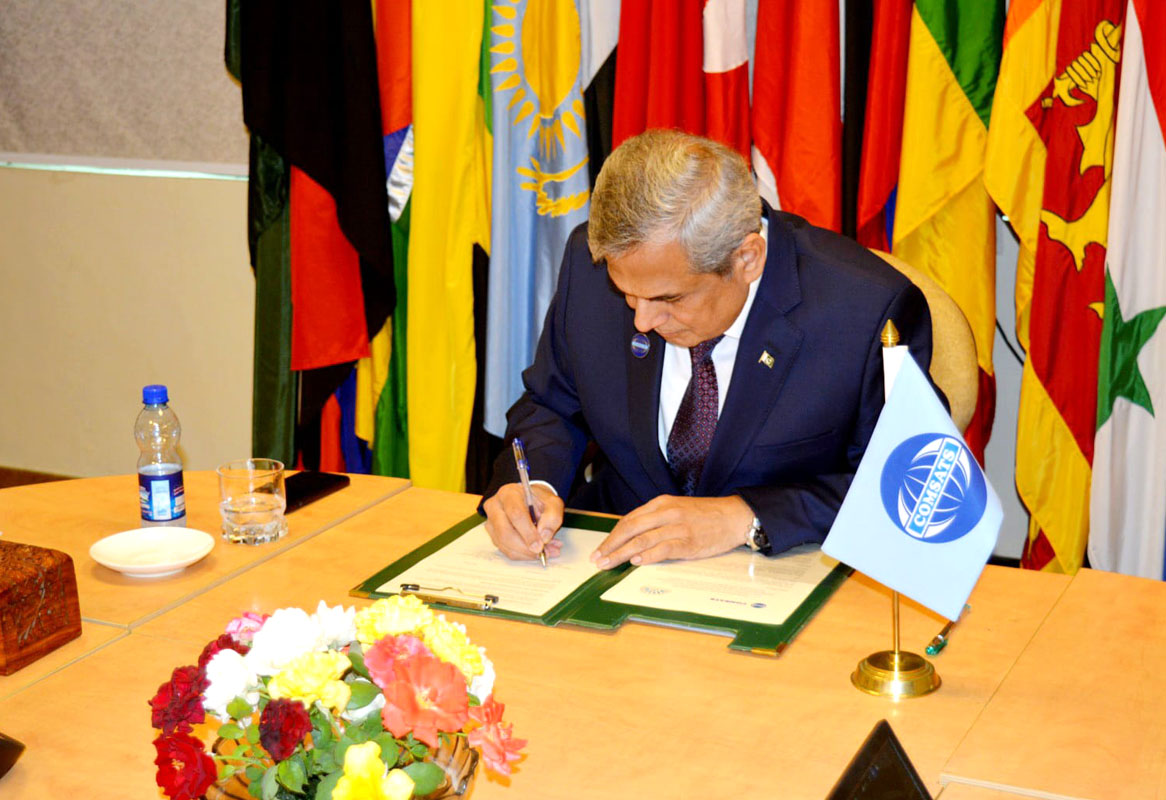
Islamabad, 20th October 2026, COMSATS and the Developing-8 Organization for Economic Cooperation (D-8) signed a Memorandum of Understanding (MoU) to establish a formal framework for cooperation in science, technology and innovation for sustainable development of their Member States.

The MoU was signed by Executive Director COMSATS, Ambassador Dr. Mohammad Nafees Zakaria, and Secretary General of D-8 Organization for Economic Cooperation, Ambassador Sohail Mahmood.
COMSATS an Intergovernmental Organization established in 1994 comprises 27 Member States, deriving strength from a Network of 25 International S&T Centres of Excellence. It is committed to advancing scientific research, innovations, and technologies for sustainable development. The D-8, also an Intergovernmental Organization, established in 1997 promotes socio-economic development through collaboration in key sectors such as trade, industry, energy, transportation, tourism, agriculture, finance, science and technology, and health. The two organizations share six common Member States, namely Bangladesh, Egypt, Iran, Nigeria, Pakistan, and Türkiye.

Ambassador Zakaria in his remarks underscored the significance of this partnership. He stated that the world, confronted by complex and interlinked challenges, must come together to address these challenges using collective strength.
Sharing his thoughts, Ambassador Sohail Mahmood stated that COMSATS and D-8 can readily work together to complement each other for a shared resolve. He informed that the D-8 is expanding its work on Climate Action and Artificial Intelligence to address the emerging challenges confronting the developing world.

The MoU aims at cooperation in several strategically important areas, including Agriculture and Food Security; Digital Transformation, Cybersecurity and ICTs; Climate Change and Environmental Sustainability; Energy Security; Industry; and Tech enabled Health-service. Cooperation also envisages joint R&D projects, capacity building, exchange of experts and scientists, joint workshops and seminars, and collaborative resource mobilization.

The areas of immediate cooperation identified by both sides include joint webinar on Telehealth, activities on climate change and zero-waste, scholarships, and training activities in emerging technologies including AI. The two sides designated their respective focal points to facilitate cooperation.